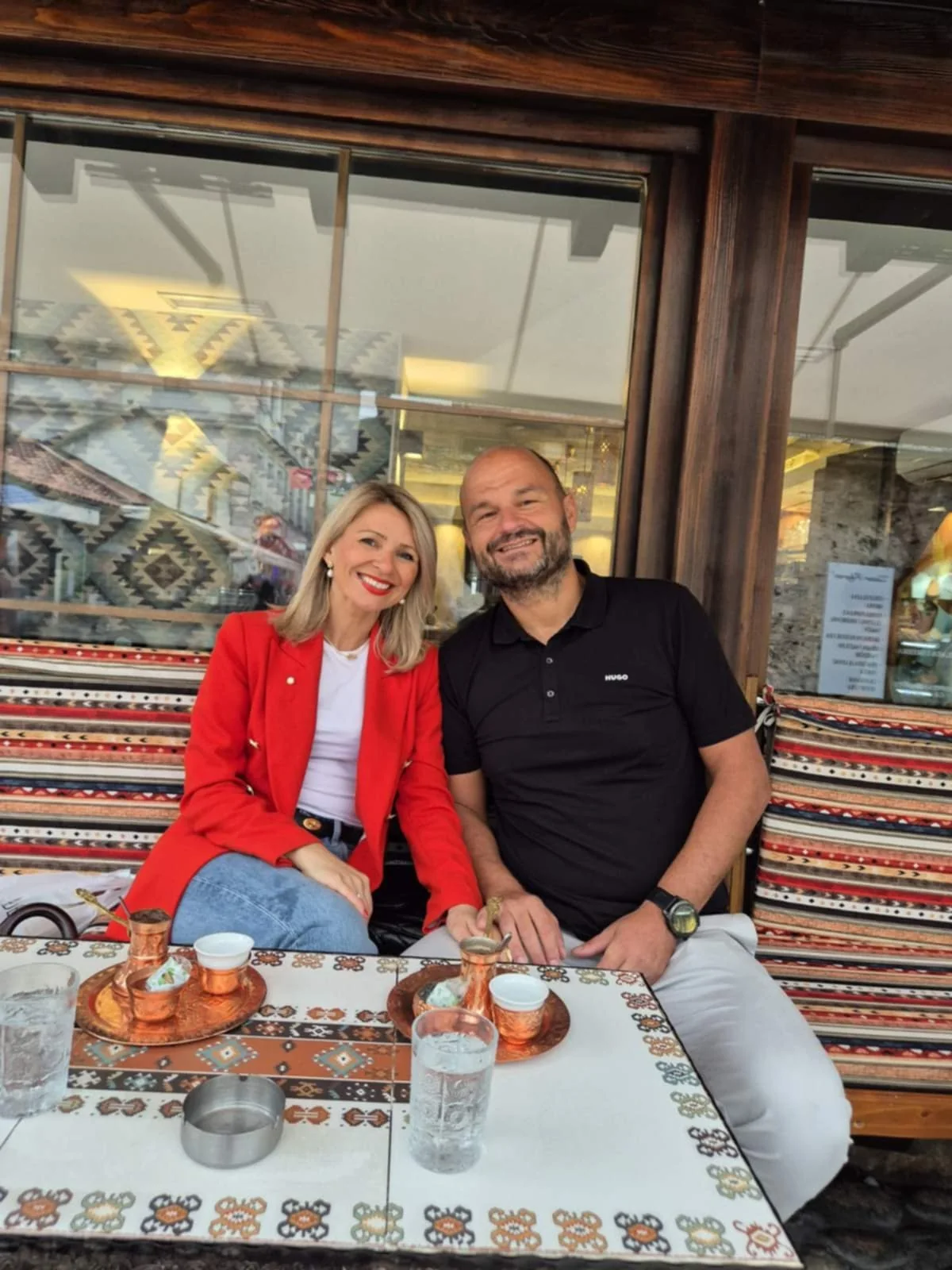
Take a seat in Baščaršija, Sarajevo’s old bazaar. Order a Bosnian coffee and let your next activity wait. A small pot, a cup and water arrive at the table, often with sugar or something sweet.
Bosnian coffee is an invitation to slow down. The flavour matters, but so does the time around the cup. There is room for conversation and watching everyday life unfold.
The history of Bosnian coffee
Coffee culture in Bosnia and Herzegovina has its roots in the Ottoman period. The empire’s trading connections brought coffee to the region, where it gradually became part of coffeehouses and homes.
People gathered over coffee to exchange news and take a break from work. Serving it to a visitor became a gesture of hospitality.
Over generations, the tradition developed its own local character through its presentation, small cups and place in everyday life. A coffee break offers an introduction to the culture you can explore on our cultural journeys through Bosnia and Herzegovina.
What is Bosnian coffee?
Bosnian coffee is made with very finely ground beans and water in a small pot called a džezva. It is unfiltered, so the grounds need time to settle.
It is traditionally served in a fildžan, a small handleless cup. The pot often arrives on a tray with water, sugar cubes and rahat lokum, a soft, sweet confection.
The name refers to the preparation and serving tradition. The beans are not grown in the country.
Is Bosnian coffee the same as Turkish coffee?
The traditions share an Ottoman heritage and both use finely ground coffee and a small pot. Preparation can differ, however.
In one common Bosnian method, hot water is added to the coffee before it is heated until the foam rises. Sugar is often served separately. In many Turkish preparations, coffee, water and any sugar are heated together.
Both traditions have variations. Ask your host how they prepare theirs.
How to drink Bosnian coffee
You do not need to learn a strict ceremony. These tips will help:
- Let the coffee settle so the grounds sink.
- Try a sip of water first to appreciate the coffee’s flavour.
- Pour gently, without disturbing the sediment.
- Try the sugar separately. Some people dip a sugar cube, take a small bite and follow it with coffee. You can also enjoy it unsweetened.
- Leave the grounds behind in the cup.
Enjoy the lokum whenever you like. Give the pause a little longer than you normally would.
Ćejf: Enjoying the small moment
The word ćejf expresses personal enjoyment or contentment that is difficult to capture in a single English word.
You have a comfortable seat, your coffee is warm and there is no reason to hurry. Perhaps you are talking with a friend. Perhaps you are enjoying the quiet.
Put your phone aside and give your attention to the place you have travelled to experience.
Experience coffee culture with AsovicTravels
Coffee breaks fit naturally between city walks, local meals and visits to craft workshops.
For more food experiences, explore our gastronomic journeys, where coffee can be combined with traditional dishes, markets and time with the people behind the food.
Tell us what you would like to experience, and we will shape a journey with time for discovery and a good cup of coffee.