
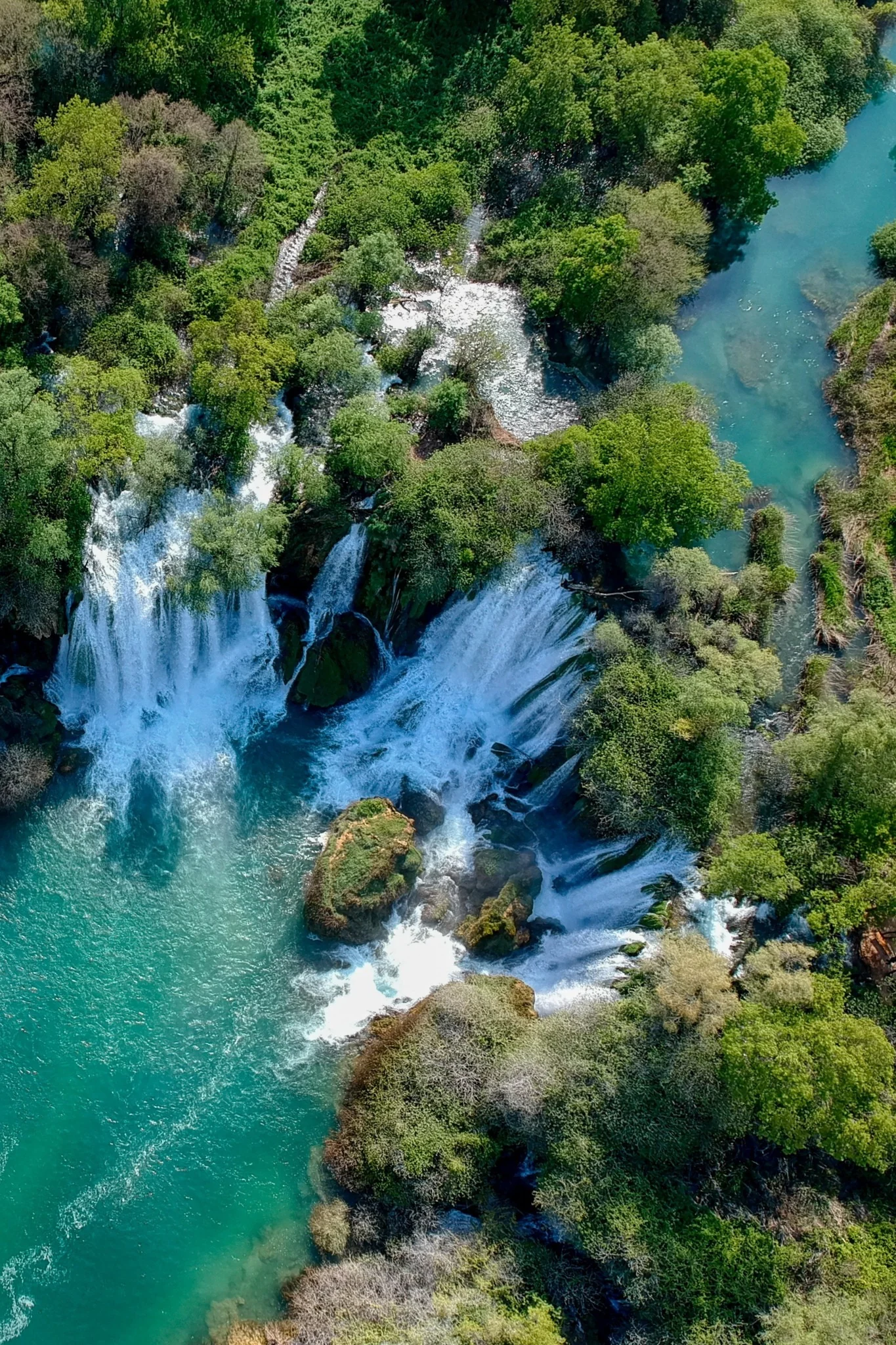
Discover Bosnia and Herzegovina
Bosnia and Herzegovina is a country that does not reveal its whole story at first glance. It is meant to be experienced slowly. Through the smell of freshly brewed Bosnian coffee, the sound of running water under an old stone bridge, and the feel of cool mountain air after a walk through forest and open uplands.
Lively cities sit close to wild rivers, deep gorges, clear mountain lakes and peaks where the view seems to continue far beyond the horizon. In Sarajevo you can walk within minutes between Ottoman trading streets, Austro-Hungarian architecture, churches, synagogues and mosques. In Mostar the old bridge is mirrored in the green water of the Neretva, while the vineyards of Herzegovina spread out between stone, sun and low mountains.
At Asović Travels we help you experience both the well-known sights and the places where the greatest experiences are not necessarily described in the guidebook.
A small country with unusually big experiences
Bosnia and Herzegovina has a rare ability to gather very different travel experiences within relatively short distances. You can start the day among Sarajevo's cafés and historic trading streets, have lunch by a mountain lake and end the day overlooking the Neretva or among the vineyards of Herzegovina.
It is precisely this variety that makes the country so well suited to round trips, active travel, culture tours, food experiences and tailor-made holidays. The landscape changes character as you travel. Green, mountainous Bosnia slowly gives way to the lighter landscape of Herzegovina, with limestone, vineyards, figs, pomegranates and an unmistakable Mediterranean feel.
The country still feels like a destination with room to be curious. In many places you meet not large crowds of tourists but family-run restaurants, small guesthouses, local guides and people happy to tell you about their town, their food and their history.
It is this combination of magnificent nature, living history and human warmth that makes travelling in Bosnia and Herzegovina special. You get the feeling of discovering something new, even standing in front of monuments that have survived for centuries.
Two regions, each with its own nature, rhythm and story
The name Bosnia and Herzegovina contains two geographical and cultural regions. They are closely connected, but each has its own landscape, climate and character.
Travelling through the country you feel the transition gradually. The forests open up, the air grows warmer, and the green mountainsides give way to limestone, vineyards and Mediterranean vegetation. It is not a sharp border you cross. It is more a slow change, felt in the light, the food, the architecture and the pace.
Bosnia: forests, mountains and living history
Bosnia is the largest and most northerly part of the country. The region is shaped by the Dinaric Alps, large forests, green valleys, rivers and towns often sheltered between the mountains.
Here you find Sarajevo, where several historical eras exist side by side. You also find Jajce with its waterfall in the middle of town, Travnik with its fortress and Ottoman history, Bihać on the clear river Una, and Banja Luka on the Vrbas.
Bosnia is green, lush and full of contrasts. The region invites hiking, rafting, cycling and nature experiences — but also a deeper look at the country's complex history.
Herzegovina: sun, stone, wine and a Mediterranean mood
Herzegovina lies to the south and has a warmer, sunnier, more Mediterranean climate. The landscape is shaped by pale limestone mountains, fertile valleys, vineyards and rivers that cut through the dry terrain like green and blue ribbons.
Mostar is the region's natural centre, but Herzegovina holds far more than the famous old bridge. The areas around Čitluk, Ljubuški, Trebinje and Mostar are known for winemaking, local produce and family-run wineries.
Herzegovina keeps its own pace. Meals are allowed to last, and the shade under a tree becomes a natural gathering point. The region suits trips where culture, nature, gastronomy and wine melt together.
Would you like to experience both Bosnia and Herzegovina?
We are happy to put together a round trip where you experience the difference between green Bosnia and sunlit Herzegovina. Tell us how many days you have and what you would like to see.
Get a free travel proposalNature is the great story of Bosnia and Herzegovina
It is hard to talk about Bosnia and Herzegovina without starting with nature. It is not merely a beautiful backdrop around the cities. It shapes everyday life, the food, the culture and the way you travel through the country.
The mountains rise close to the towns, and the rivers run through gorges, valleys and historic town centres. In many places the water is so clear you can see the stones on the bottom. Forests cover large parts of the landscape, and high among the mountains lie lakes, pastures and villages where life still follows the rhythm of the seasons.
What makes it special is the proximity. You do not need whole travel days to get from the city to nature. From Sarajevo you can quickly reach Bjelašnica, Visočica and Trebević. From Mostar there is access to Prenj, Čvrsnica, Blidinje and the Neretva valley. From Bihać the experiences follow the Una, while the area around Foča opens the door to Sutjeska National Park, Maglić and the Tara canyon.
It is also nature that can still feel undisturbed. On many hiking routes there is a lot of space between groups. That is exactly why we recommend a local guide on the longer and more demanding walks. It gives peace of mind and access to the local knowledge that makes the landscape come alive.
Six mountains that show Bosnia and Herzegovina from above
The mountains of Bosnia and Herzegovina are raw, green and surprisingly varied. Some are accessible to ordinary walkers, while others demand experience, fitness and a local guide. What they share is a sense of space. Here you still find trails where the silence fills more than the crowds.
Maglić: the country's highest mountain
Maglić rises in the south-east of the country close to the border with Montenegro. At 2,386 metres it is the highest mountain in Bosnia and Herzegovina and a natural goal for experienced hikers.
The mountain sits in the area around Sutjeska National Park, where steep slopes, deep valleys and dense forest create a dramatic landscape. Here too is Perućica, one of Europe's last remaining primeval forests.
The climb towards Maglić's heights demands respect for the weather and the terrain. In return you are rewarded with sweeping views and the emerald Trnovačko lake on the Montenegrin side of the border.
Prenj: the wild mountain world of Herzegovina
Prenj stands like a mighty limestone wall above the Neretva valley and is often called the Himalaya of Herzegovina. The name makes sense when you see the pale, jagged peaks rising over the green valleys around Konjic, Jablanica and Mostar.
The mountain has a raw, alpine character: steep passages, high plateaus, open pastures and views that change with every step.
Prenj is for walkers who want something special and prefer to be away from the busiest routes. On demanding trips we always recommend an experienced local mountain guide.
Čvrsnica: cliffs, views and Hajdučka Vrata
Čvrsnica rises above Blidinje Nature Park and is one of Herzegovina's most striking mountain areas. The landscape shifts between pine forest, open plateaus, steep cliffs and far-reaching views.
One of the best-known natural features is Hajdučka Vrata, a natural stone arch standing high in the mountains. Getting there takes stamina, but the reward is one of those views that stays with you long after you get home.
Čvrsnica suits both longer hikes and trips based around Blidinje.
Bjelašnica: from Olympic mountain to living village culture
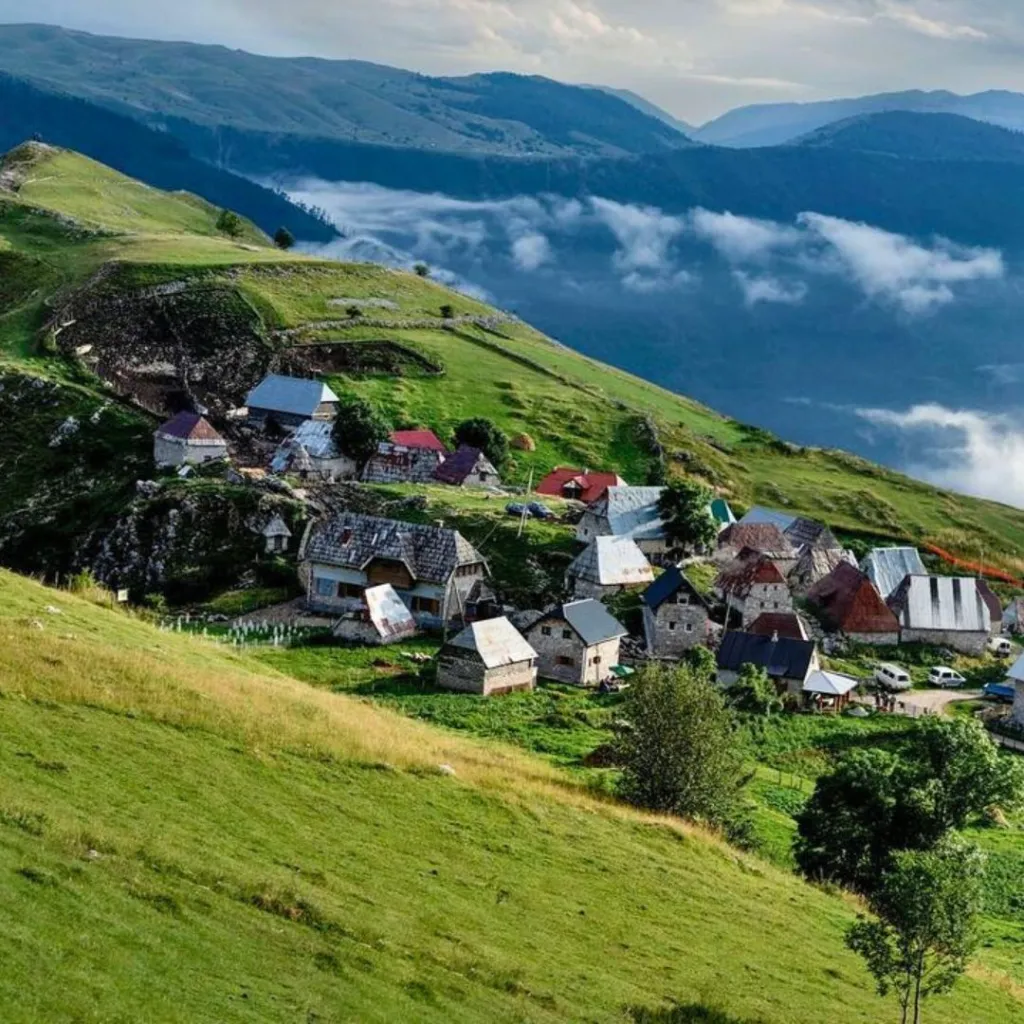
Bjelašnica lies close to Sarajevo and is known as one of the mountains from the 1984 Winter Olympics. In winter it is a popular ski area, but in summer it opens up as a large hiking area with fresh mountain meadows and access to traditional villages.
The best known is Lukomir, one of the highest and best-preserved traditional mountain villages in the country. Stone houses, pastures and the view over the Rakitnica gorge give the place a particular atmosphere.
A walk can be combined with home-cooked food, local cheeses and meeting people who know these mountains as home.
Visočica: quiet trails above Rakitnica
On the other side of the Rakitnica gorge lies Visočica. The mountain is less well known than Bjelašnica, and for exactly that reason it often feels quieter and more untouched.
The paths run through open grassland, over gentle ridges and past small communities where the pace still follows nature. From the high ground there are views towards Prenj, Bjelašnica and the deep Rakitnica gorge.
Visočica is an obvious choice for travellers who want hiking away from the best-known tourist trails.
Zelengora: green mountains and quiet mountain lakes
Where Maglić is steep and dramatic, Zelengora is softer in its shapes. The name is associated with the green mountain, and the landscape lives up to it. Grassy heights roll across the horizon, while small mountain lakes lie like dark mirrors between the slopes.
Zelengora is known for its mountain eyes — natural lakes such as Orlovačko, Kotlaničko and Štirinsko.
It is a place for calm, long walks and the feeling of being far from modern everyday life.
Would you like to experience the mountains properly?
We help you choose the mountain and the route that fits your level. You do not need to know the difference between Prenj, Čvrsnica and Zelengora in advance. Just tell us how you would like to experience nature.
Talk to us about an active tripSix rivers that give the country life
The rivers are among the greatest natural experiences in Bosnia and Herzegovina. They run through towns and mountain landscapes, create waterfalls and gorges, and frame everything from quiet meals by the water to rafting, fishing and swimming.
The Neretva: the green lifeline through Herzegovina
The Neretva is the river that ties much of Herzegovina together. It runs from the mountains through Konjic, Jablanica and Mostar before continuing towards the Adriatic. The green and turquoise of the water stands in sharp contrast to the pale limestone mountains around it.
At Konjic the Neretva is associated with rafting and active days outdoors. In Mostar it runs beneath Stari Most, the famous old bridge.
A journey along the Neretva is almost a journey through Herzegovina's identity.
The Una: a river that lives up to its name
The Una runs through north-western Bosnia and Herzegovina and is known for its unusually clear water. The name is popularly linked to the Latin for the one, or the unique.
In Una National Park the river creates rapids, small islands and impressive waterfalls. Štrbački Buk is the best known, while Martin Brod offers a series of falls and old watermills.
The area around Bihać is ideal for rafting, kayaking, swimming and time outdoors. But the river should also be experienced slowly.
The Drina: deep-green history along the country's eastern edge
The Drina begins where the Tara and the Piva meet, and continues through a landscape of forested slopes, gorges and historic towns. For centuries the river has been both a route and a frontier.
At Višegrad the Mehmed Paša Sokolović bridge spans the water. The Ottoman stone bridge is on the UNESCO World Heritage list.
The Tara: rafting through one of Europe's deepest canyons
The Tara is known for its clear water and dramatic canyon. Part of the river forms the border between Bosnia and Herzegovina and Montenegro, and the area around Foča is an important base for rafting.
On the water the experience alternates between calm stretches and stronger rapids.
Difficulty depends on the season, the water level and the stretch you choose. With professional local instructors the trip can be adapted to groups of friends, families and company trips alike.
The Vrbas: a river with pace, gorges and city life
The Vrbas runs through central and northern Bosnia and Herzegovina and on through Banja Luka. South of the city it cuts through a deep gorge where cliffs, forest and rapids frame the rafting.
Closer to Banja Luka the Vrbas becomes part of city life. A day can start on the river and end with dinner in town.
The Trebižat: waterfalls in sunlit Herzegovina
The Trebižat runs through western Herzegovina and is known for its waterfalls and its curious journey through the karst. In several places the river disappears underground and resurfaces later.
The Kravica waterfalls are the best-known spot along the river, where the water falls in a broad arc into a green pool. Koćuša is less known but has its own quiet charm.
The Trebižat fits naturally into a trip taking in Mostar, Počitelj, Ljubuški and the area's wineries.
Seven lakes among the mountains
The lakes of Bosnia and Herzegovina often sit surrounded by mountains and forest. Some are natural, others were created as reservoirs. What they share is the particular calm they bring to the landscape.
Lake Boračko
Lake Boračko lies in a green bowl between the mountains near Konjic. The road there runs through a landscape where the mountains gradually close in around the water.
In summer the area is used for swimming, kayaking and relaxing. The lake also makes a calm stop after rafting on the Neretva.
Lake Blidinje
Lake Blidinje lies on a high plateau between the Čvrsnica and Vran mountains. The open landscape around it feels almost endless, especially when clouds move across the slopes and are mirrored in the shallow water.
The area is part of Blidinje Nature Park and suits hiking, cycling and unhurried stays.
Lake Prokoško
High on Mount Vranica lies Lake Prokoško, surrounded by pasture and traditional shepherds' huts. The drive up through the mountains is part of the experience.
Prokoško is not a polished tourist attraction. It is precisely its simple, rustic character that makes the visit memorable.
The Pliva lakes
Close to Jajce, the large and small Pliva lakes lie in a green and peaceful area. Between them stand the historic watermills known locally as mlinčići.
The lakes invite kayaking, walks and quiet hours by the water. Together with Jajce's fortress, catacombs and waterfall they make a full day where nature and history go hand in hand.
Lake Rama
Lake Rama is known for its branching shape, with bays, peninsulas and small islands. The water is ringed by mountains and the view changes constantly.
One of its distinctive sights is the monastery at Šćit. The area suits a scenic drive and quiet stays away from the larger towns.
Lake Jablanica
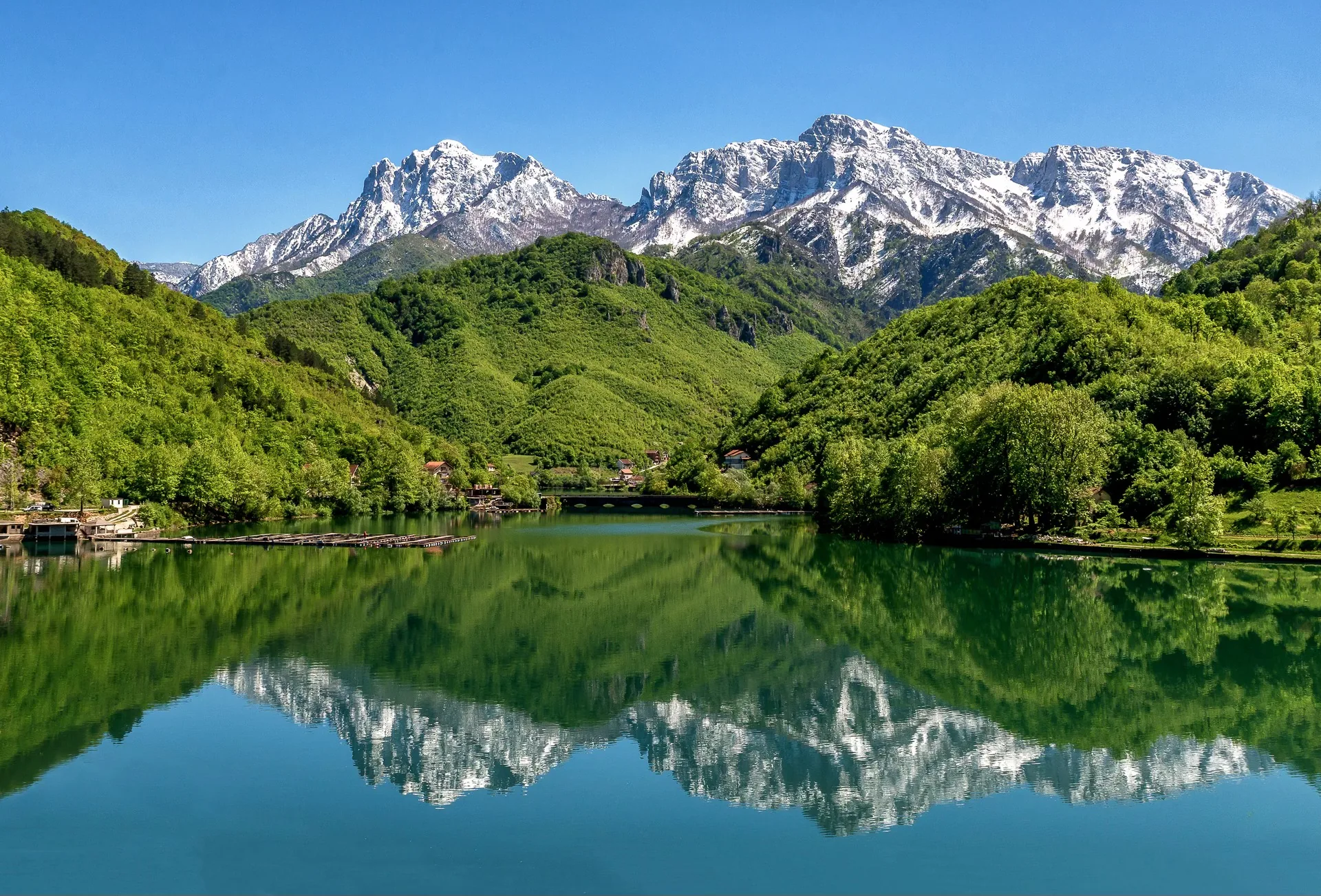
Lake Jablanica follows the Neretva valley, ringed by the Prenj, Čvrsnica and Bitovnja mountains. On still days the slopes are mirrored in the water.
The area is known for restaurants serving grilled lamb, so a stop here can be as much a culinary experience as a scenic one.
Lake Buško
Lake Buško lies in western Bosnia and Herzegovina, close to Livno and the Croatian border. The wide expanse of water sits open between mountains, fields and pasture.
It combines well with Livno's historic town centre and the region's famous wild horses.
Six towns, each telling its own part of the story
The towns of Bosnia and Herzegovina are not separate from the nature around them. Rivers run through the centre, mountains rise behind the rooftops, and the history can be read directly in the architecture of the streets.
Sarajevo: the city where worlds meet
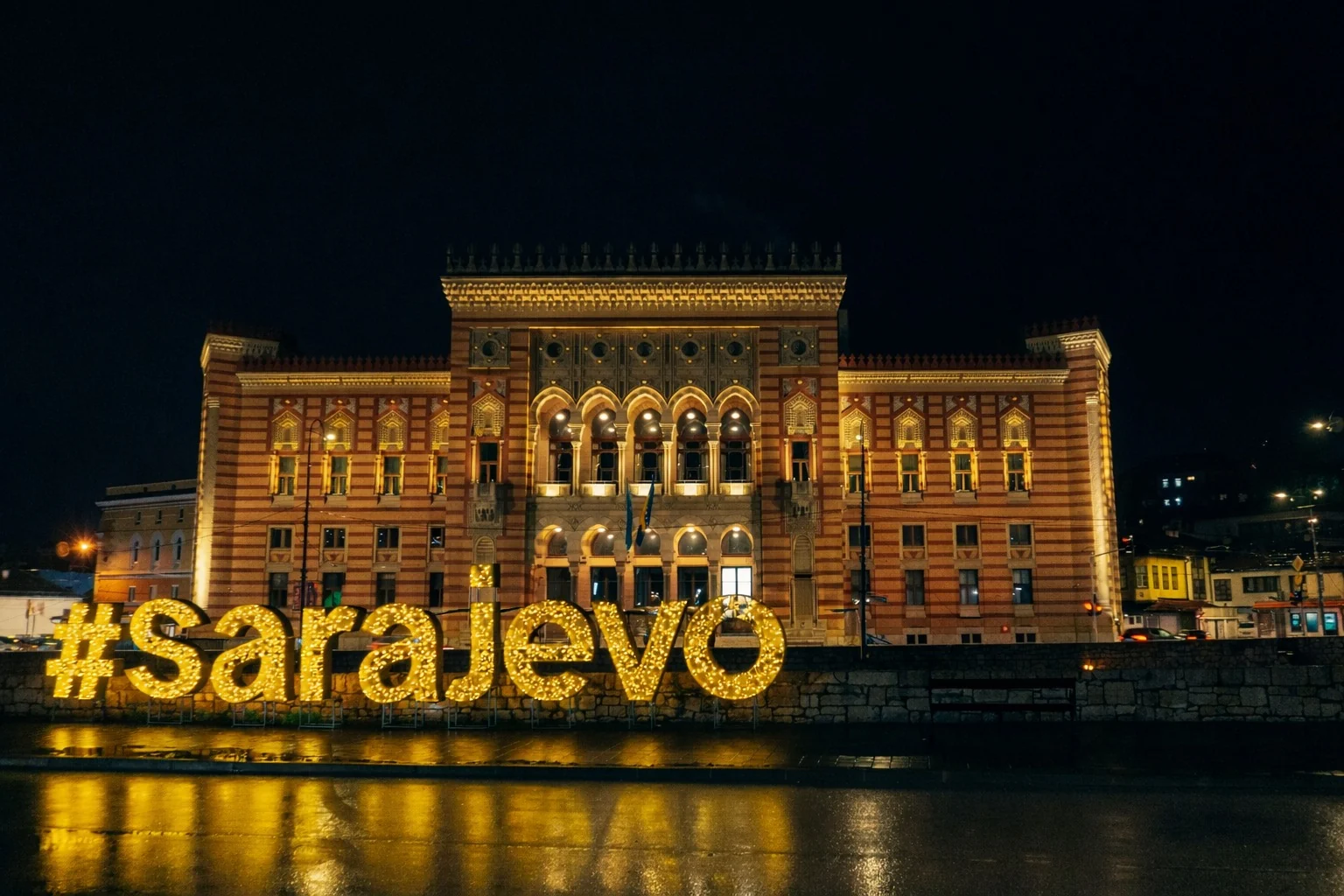
Sarajevo lies in a valley ringed by mountains. The city centre gathers several centuries of history within a relatively small area.
In Baščaršija cobbled streets run between small workshops, mosques, shops and cafés. Bosnian coffee is served in traditional copper pots, and the smell from the grills mixes with the sounds of the old trading town.
Move on towards Ferhadija and the architecture gradually changes character. The Ottoman buildings give way to facades from the Austro-Hungarian period. The city tells its story through its buildings, but also through its people, its food and its everyday life.
Sarajevo also carries the marks of the siege in the 1990s. That history is visible and important, but the city should not be understood only through the war. Sarajevo is also music, film, cafés, art, humour and a strong street life.
Mostar: more than the old bridge
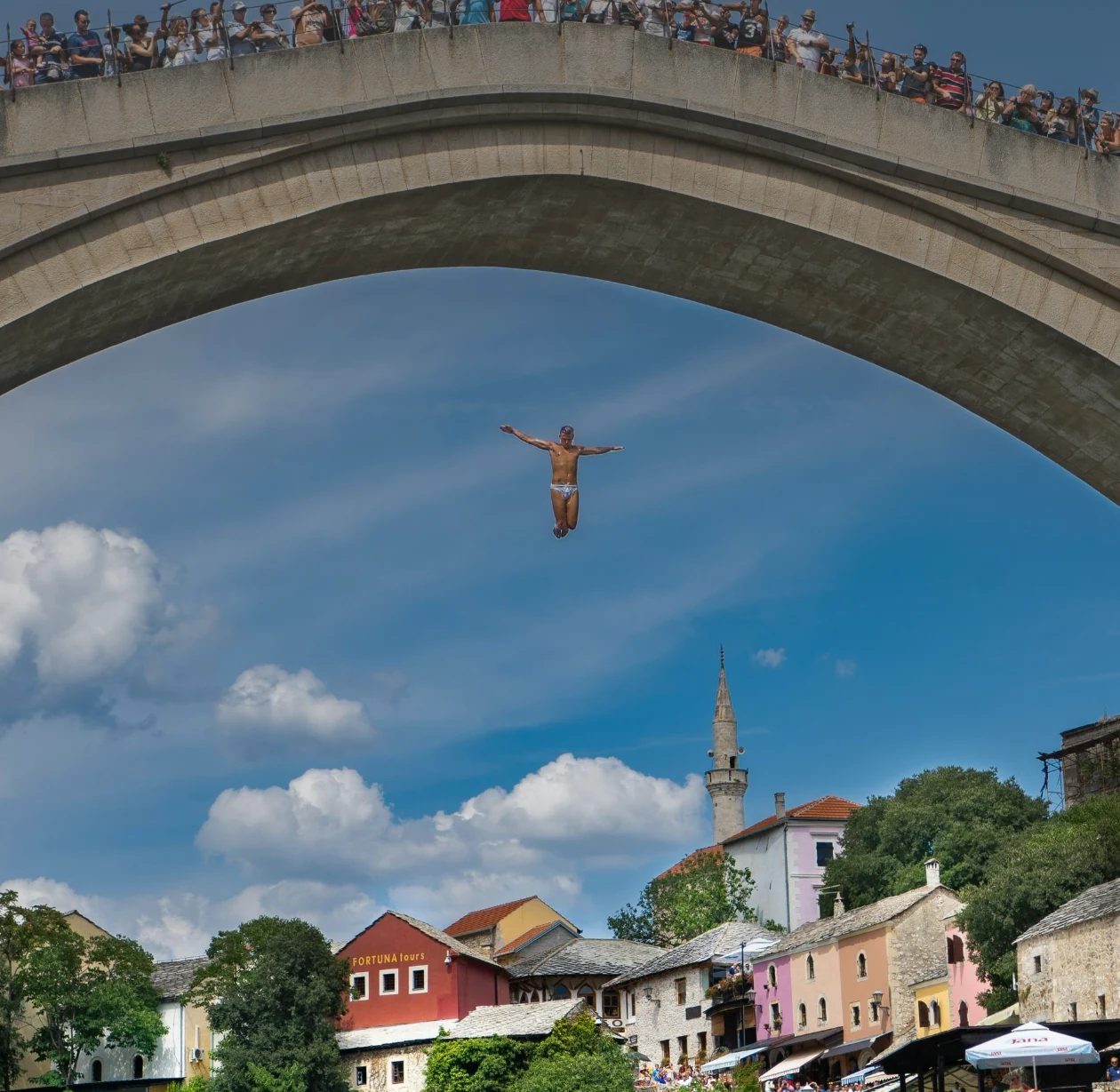
Mostar is known worldwide for Stari Most, the elegant stone bridge spanning the Neretva. The bridge is the city's symbol, but it is also the way into a larger story of trade, craft, destruction and rebuilding.
In the old town small shops and cafés line the polished cobblestones. From the bridge you look down on the green water of the Neretva and up at the dry mountainsides enclosing the city.
Mostar is worth experiencing both early and late in the day. In the morning the streets are quiet and the light falls softly on the stone houses. In the evening people gather along the river as the restaurants fill up.
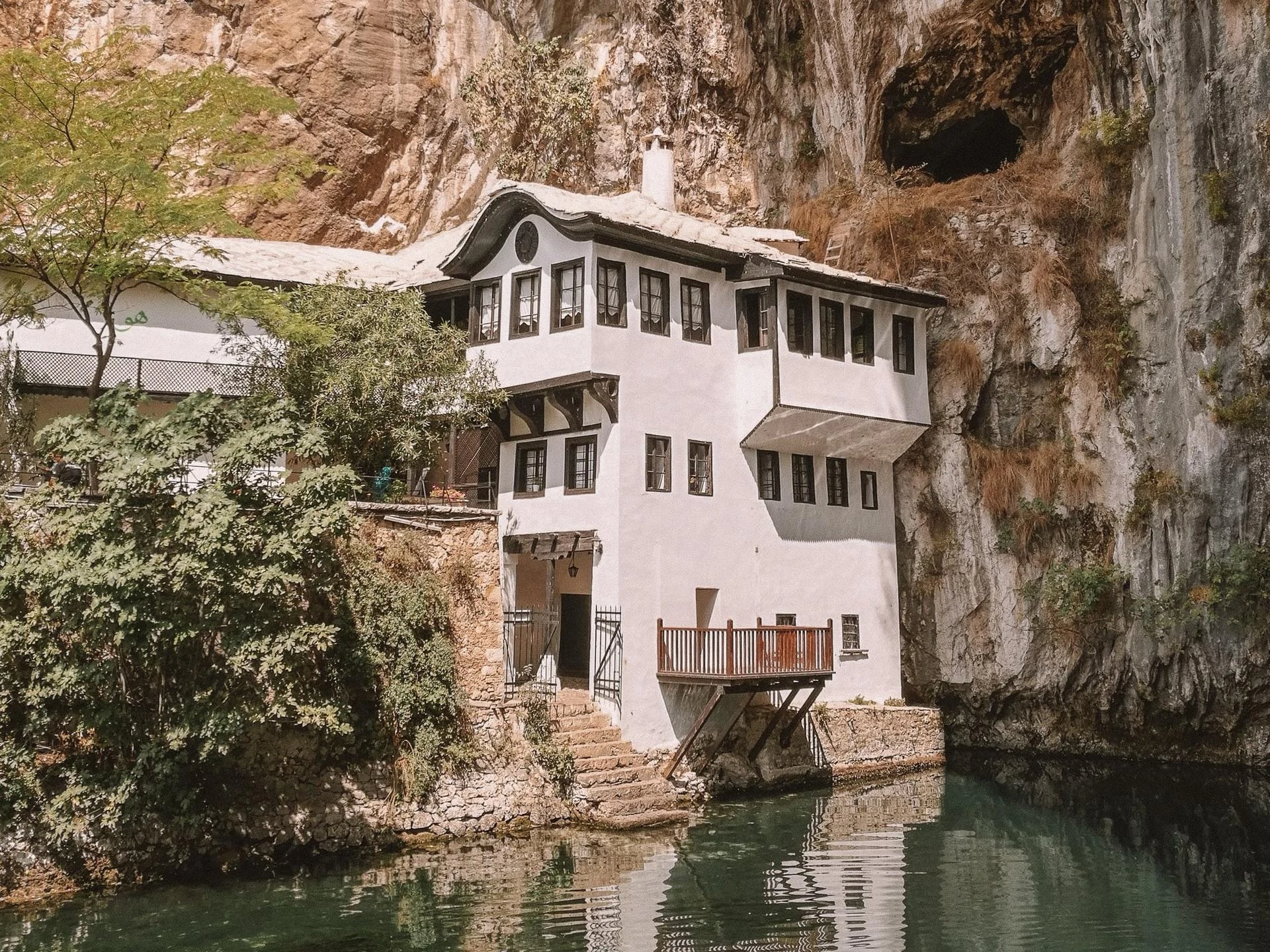
Mostar is also an obvious base for trips to Blagaj, Počitelj, the Kravica waterfalls, the mountains and the wineries of Herzegovina.
Konjic: the gateway to the mountains and the Neretva
Konjic sits where the mountains gather around the Neretva. The old stone bridge connects the two sides of town, while cafés and restaurants line the water.
The town is known for its traditional woodcarving, but also for its more recent history. Nearby is Tito's bunker, an extensive underground complex built in secret during Yugoslav times.
Konjic is also an important base for rafting on the Neretva, visits to Lake Boračko and hikes towards Prenj.
Jajce: waterfalls, kings and watermills
Jajce is one of the country's most distinctive historic towns. In the middle of it the river Pliva drops into the Vrbas, creating a large waterfall directly below the old centre.
Above the falls stand the fortress and the old quarters, where traces of Bosnia's medieval kings can still be seen. Jajce is where Stjepan Tomašević, the last Bosnian king, was crowned in 1461. The town also played an important role in the Second World War, when the foundations of socialist Yugoslavia were laid here in 1943.
Close by lie the Pliva lakes and the small historic watermills.
Trebinje: plane trees, wine and slow evenings
Trebinje lies in southern Herzegovina, close to the Croatian and Montenegrin borders. The town has a relaxed Mediterranean feel, with pale stone houses, an old quarter and large plane trees shading the cafés.
The river Trebišnjica runs through the town, and around Trebinje lie some of Herzegovina's most interesting wine areas.
Trebinje is a town that quickly makes you want to slow down.
Bihać: the town on the remarkable Una
Bihać lies in north-western Bosnia and Herzegovina and is inseparable from the river Una. The water runs through the town and gives the centre a green, open character.
Bihać is the natural base for Una National Park, Štrbački Buk and Martin Brod. The region is ideal for rafting and active trips.
The town shows a different side of the country to Sarajevo and Mostar. Here nature is clearly the main character.
Which towns suit your trip?
You do not have to choose between Sarajevo, Mostar, Jajce, Konjic, Trebinje and Bihać on your own. We put the route together based on the length of the trip, the season and your interests, so you spend your time on experiences rather than unnecessary travel.
Let us plan your round tripThe history of Bosnia and Herzegovina
The history of Bosnia and Herzegovina is long, layered and far older than the conflicts many people in Denmark first associate with the country.
Its position between the Adriatic, Central Europe and the Balkans has made the area a meeting point for empires, religions, trade routes and cultural influences for centuries. Roman roads, medieval tombstones, Ottoman bridges, Catholic and Orthodox churches, mosques, synagogues and Austro-Hungarian buildings are therefore not just individual sights. Together they tell the story of a country that has always sat between larger worlds while developing an identity of its own.
The history can be experienced directly on a trip. It is in the streets of Sarajevo, under the old bridge in Mostar, in the fortress at Jajce, at the stećci tombstones around Stolac, and in small villages where the traditions are still part of daily life.
Before Bosnia: Illyrians and Romans
Long before the name Bosnia appeared in written sources, the area was inhabited by Illyrian tribes. They lived in the mountains, the valleys and the fertile land close to the rivers.
The Romans gradually conquered the area and made it part of their empire. They built roads, bridges, military installations and settlements linking the Adriatic coast with the lands further inland.
When the Roman Empire was divided, the area came to lie on the frontier between its western and eastern halves. Even then the country's position between different cultural and political worlds was clear.
The arrival of the Slavs and early Bosnia
Slavic peoples settled in the area during the sixth and seventh centuries. Over the following centuries local principalities and centres of power grew up between the mountains and the rivers.
The name Bosnia is most likely connected to the river Bosna. The region was influenced by the Byzantine Empire, by Croatian and Serbian rulers and by the Hungarian kingdom, but the difficult mountain terrain allowed local rulers to achieve a considerable degree of independence.
Trade routes connected the area with the Dalmatian coast, Dubrovnik and the towns to the north. Silver, metals, salt and textiles were carried through the country.
The medieval Bosnian kingdom
In the Middle Ages Bosnia developed first into a banate and later into an independent kingdom. A ban was a regional ruler, and several Bosnian bans gradually strengthened the country's political position.
Ban Kulin, who ruled from the late twelfth century, is remembered as one of the most important medieval rulers. His charter of 1189 regulated trade with Dubrovnik and is among the oldest surviving documents of the Bosnian state.
Bosnia reached a political high point under Tvrtko I Kotromanić. Crowned king in 1377, he ruled a kingdom that gained access to the Adriatic and became a significant power in the western Balkans.
This period matters because it shows that Bosnia and Herzegovina had its own state and cultural development long before the Ottoman and Austro-Hungarian periods.
The Bosnian Church and the story of the Bogomils
The Bosnian Church is one of the most fascinating and debated chapters in the country's medieval history. It existed alongside the Catholic and Orthodox churches and held a distinctive position in society.
Older accounts often described the Bosnian Church as Bogomil. The connection is more complicated than it is usually presented, and historians still debate the church's theology, organisation and relationship to other Christian traditions. Simply equating the Bosnian Church with Bogomilism is not accurate.
What is interesting for the traveller is that medieval Bosnia developed a religious landscape that does not fit neatly into a simple division between east and west.
Stećci: stories written in stone
Scattered across mountainsides, pastures and old burial grounds lie the monumental medieval tombstones known as stećci. Most are carved from limestone and date from between the twelfth and fifteenth centuries.
Some stand as plain blocks of stone. Others are decorated with spirals, crosses, weapons, plants, people, animals, riders and figures that appear to dance with raised hands.
Stećci were used by people from different Christian communities and cannot be attributed to a single faith. One of the best-known collections is at Radimlja near Stolac.
The stećci are recognised today as UNESCO World Heritage.
The Ottoman Empire
In 1463 most of Bosnia was conquered by the Ottoman Empire. The last Bosnian king, Stjepan Tomašević, was captured and executed. Herzegovina was gradually absorbed into the empire in the years that followed.
The Ottoman period lasted more than four centuries and changed the towns, the religion, the trade and the architecture. Islam gained a strong presence, while Catholic, Orthodox and later Jewish communities continued to shape the country.
Sarajevo grew from a small settlement into an important administrative and commercial centre. Mostar developed around the Neretva, and Stari Most was built in the sixteenth century. Travnik became an administrative centre, Višegrad gained its stone bridge over the Drina, and Blagaj became an important religious site at the source of the Buna.
After the expulsion of Jews from Spain and Portugal in the late fifteenth century, Sephardic Jews found a new home in several parts of the empire, including Sarajevo. The Jewish community became an important part of the city's cultural and economic life.
The Ottoman legacy lives on in the architecture, the food, the coffee and the crafts.
Austria-Hungary and a new European era
After the Russo-Turkish war, Austria-Hungary gained the right in 1878 to occupy and administer Bosnia and Herzegovina. The country formally remained under Ottoman sovereignty until annexation in 1908.
The new administration launched a sweeping modernisation with railways, roads, schools, hospitals and industry. The towns gained new quarters, and a distinctly European architecture grew up alongside the Ottoman districts.
Nowhere is the transition clearer than in Sarajevo. Walking from Baščaršija towards Ferhadija, the streetscape shifts gradually from low Ottoman trading buildings to large facades inspired by Vienna.
The period also left its mark on Herzegovina's winemaking. Around Mostar, vineyards and formal wine education were developed in the time of Emperor Franz Joseph.
The shots in Sarajevo and the First World War
On 28 June 1914 the Austro-Hungarian heir Franz Ferdinand and his wife Sophie visited Sarajevo. During the visit they were shot and killed by Gavrilo Princip.
The assassination set off the chain of ultimatums, mobilisations and declarations of war between Europe's great powers.
The spot by the Latin Bridge in Sarajevo can still be visited, where an event of world history becomes concrete and immediate.
After the war Austria-Hungary collapsed, and Bosnia and Herzegovina became part of a new South Slav kingdom, later named the Kingdom of Yugoslavia.
The Kingdom of Yugoslavia and the Second World War
Between the two world wars Bosnia and Herzegovina was part of the Kingdom of Yugoslavia. The period was marked by political tension and debate about how the new state should be organised.
During the Second World War Yugoslavia was invaded by the Axis powers, and Bosnia and Herzegovina became part of the fascist Ustaša state. The war became at once an occupation, a resistance struggle and an internal conflict.
Civilians were subjected to widespread persecution, mass killing and deportation. Jews, Roma, Serbs and political opponents were among the groups systematically persecuted.
The communist Partisans under Josip Broz Tito organised a large resistance movement. Sutjeska National Park today holds a monumental memorial complex for the 1943 battle of Sutjeska.
Jajce and the creation of socialist Yugoslavia
In November 1943 the second session of the Anti-Fascist Council for the National Liberation of Yugoslavia was held in Jajce. It laid the foundations of federal socialist Yugoslavia.
Bosnia and Herzegovina was recognised as one of the new state's six republics — an important decision, because the country was not divided between neighbouring republics but kept its territorial unity.
After the war the monarchy was abolished and Tito became leader of socialist Yugoslavia. The country broke with the Soviet Union in 1948 and became an important player in the Non-Aligned Movement.
Life in socialist Yugoslavia
In the decades after the Second World War, Bosnia and Herzegovina went through extensive industrialisation and urbanisation. Factories, power stations, roads, schools and housing were built.
Sarajevo, Zenica, Tuzla, Mostar and Banja Luka grew. New jobs created social mobility and education levels rose. At the same time Yugoslavia was a one-party state with limited political freedom.
In Bosnia and Herzegovina, where families and communities were often ethnically and religiously mixed, a shared Yugoslav identity became a real part of many people's lives.
In 1984 Sarajevo hosted the Winter Olympics. The mountains Bjelašnica, Jahorina, Igman and Trebević framed the events. The Olympic venues can still be visited — some modernised, others standing as raw concrete tracks in the mountains.
The break-up of Yugoslavia and independence
After Tito's death in 1980, Yugoslavia's economic and political problems grew. Nationalist movements gained influence and tensions between the republics increased.
Slovenia and Croatia declared independence in 1991. In Bosnia and Herzegovina the question was especially difficult, because the population was made up of Bosniaks, Serbs, Croats and other groups who had lived closely together for generations.
Following a referendum, Bosnia and Herzegovina declared independence in 1992 and was recognised internationally. Shortly afterwards the political crisis turned into war.
The war from 1992 to 1995
The war in Bosnia and Herzegovina lasted from 1992 to 1995 and was the bloodiest conflict of Yugoslavia's break-up. Cities were besieged, villages destroyed, and large parts of the population driven from their homes.
Sarajevo endured a siege lasting almost four years. Its residents lived under shelling and with severe shortages of food, water, electricity and medicine. Even so, parts of cultural life and daily routine continued as a form of resistance.
In Mostar, Stari Most was destroyed in 1993. The bridge was later rebuilt using traditional techniques and reopened in 2004.
The war involved widespread ethnic cleansing, internment camps, sieges and systematic abuses against civilians. In July 1995 more than 8,000 Bosniak men and boys were killed in and around Srebrenica. International courts have established the crime as genocide.
The war cost more than 100,000 lives, while around two million people were forced from their homes.
When the war is presented on a trip, it must be done with respect for the victims and for the complexity of the history. It is not about turning suffering into a sight, but about creating understanding of the people who lived through it.
The Dayton Agreement and modern Bosnia and Herzegovina
The war ended through the peace negotiations at Dayton in the United States in 1995. The agreement preserved Bosnia and Herzegovina as one internationally recognised state, but created a complicated political structure with two entities — the Federation of Bosnia and Herzegovina and Republika Srpska — plus the Brčko District.
Dayton stopped the war, but the political structure has since made reform difficult. The country continues to work through questions of reconciliation, return, identity, economic development and its relationship with the EU.
At the same time Bosnia and Herzegovina is far more than its political challenges. It is a society with music, film, art, sport, cafés, restaurants, entrepreneurs and a new generation determined to create opportunities in their own country.
Traces of the war are still visible, but the country should not be reduced to its most recent conflict. Travelling through Bosnia and Herzegovina is also a story of survival, humour, hospitality and the ability to build something new without forgetting the past.
History is to be experienced, not only read
The history of Bosnia and Herzegovina becomes clearest when it is tied to the places where the events happened.
In Sarajevo you can walk from the Ottoman trading town to Austro-Hungarian boulevards and on to the spot where the 1914 assassination took place. In Jajce you can encounter both the medieval kings and the story of socialist Yugoslavia. In Mostar you meet a bridge that speaks of Ottoman craftsmanship, wartime destruction and later reconstruction.
At Radimlja the medieval stećci stand under open sky. In Sutjeska you find both one of Europe's last primeval forests and the memory of a decisive battle. In Srebrenica the memorial centre tells the story of the genocide and the people who lost their lives.
We work with local guides who can place these sites in a wider context and handle sensitive subjects factually, humanly and with respect.
Would you like to understand Bosnia and Herzegovina through its history?
We arrange culture trips and historical round trips for couples, families, groups of friends, associations, schools and veterans. Tell us which periods or places interest you.
Get a proposal for a culture tripHere there is always time for a cup of coffee
Hospitality in Bosnia and Herzegovina is most often felt around a table. An invitation to coffee is rarely only about drinking coffee. It is an invitation to sit down, talk and give the moment some time.
Bosnian coffee is traditionally served in a džezva, usually with sugar or something sweet. The ritual around it says a great deal about the country's relationship with time and company. You do not necessarily drink the coffee quickly in order to move on. The pause itself is part of the experience.
The Bosnian idea of ćejf describes the pleasure of small moments you deliberately make room for: the first coffee in the morning sun, a meal with friends, a view over a river, or the feeling of sitting in the shade after a hot day.
As a guest you are usually met with genuine interest. A local guide talks not only about the monuments but about their own town. A winemaker talks about the family and the land. A host may serve rather more dishes than you thought you had ordered.
These encounters are what separate seeing a country from really experiencing it. That is why we prioritise local guides, hosts and producers who can open the door to the Bosnia and Herzegovina you will not find by following a map alone.
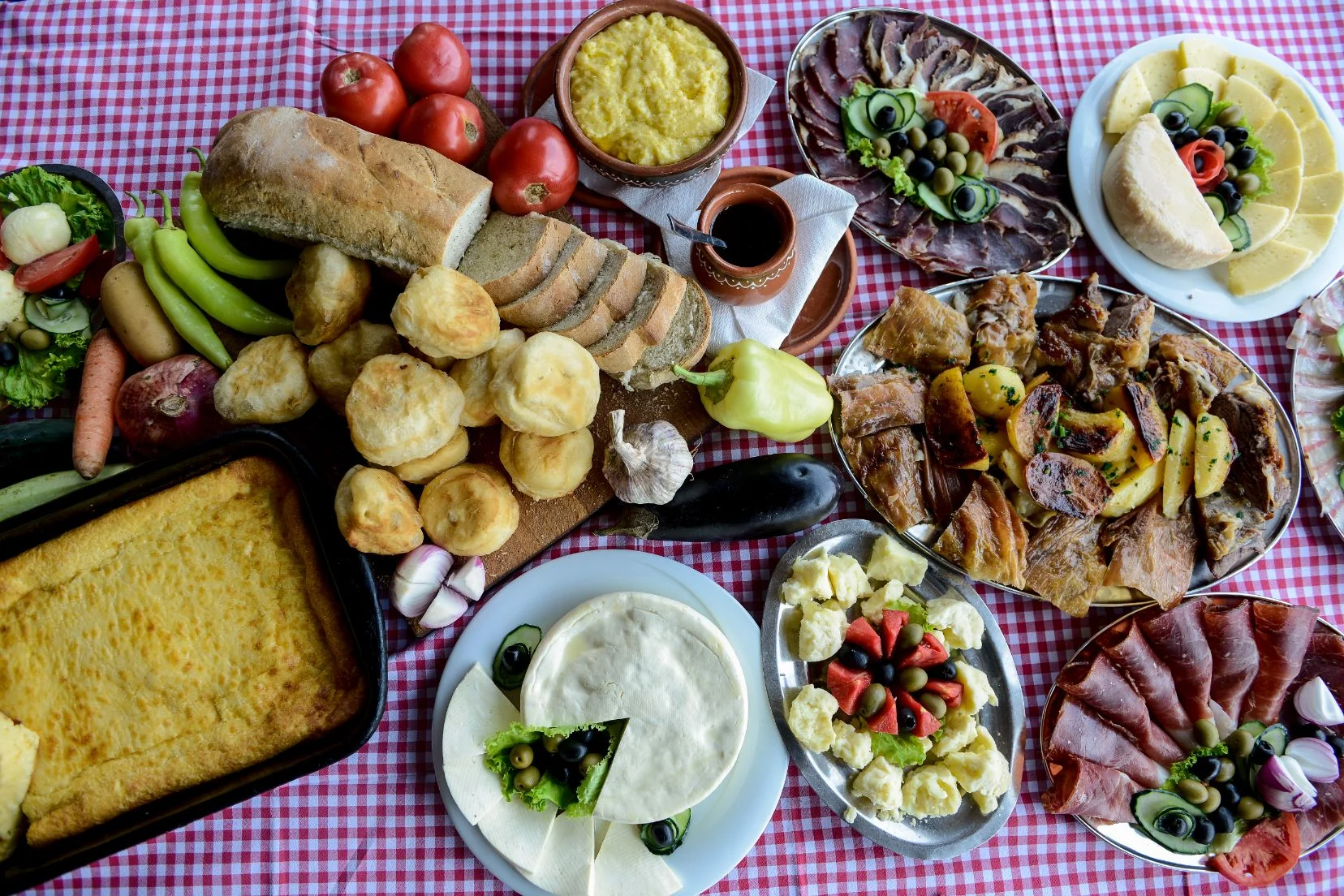
A cuisine shaped between the mountains and the Mediterranean
The food of Bosnia and Herzegovina follows the landscape. In the greener, cooler parts of Bosnia you find hearty soups, stews, pies, meat dishes and homemade dairy. In sunlit Herzegovina, fish, vegetables, cheese, olive oil, herbs and wine take up more of the table.
Burek and other filled pies are rolled and baked according to each family's own tradition. Ćevapi are served with somun, onion and often kajmak. Slow-cooked meat, grilled lamb, dolma, japrak and various soups speak of both local produce and historical influences.
The sweet kitchen includes baklava, tufahija and hurmašice, and a meal often ends with Bosnian coffee.
The greatest culinary experience, though, is not necessarily one particular dish. It is the whole: the smell from the kitchen, the ingredients, the story, and the time set aside for the meal.
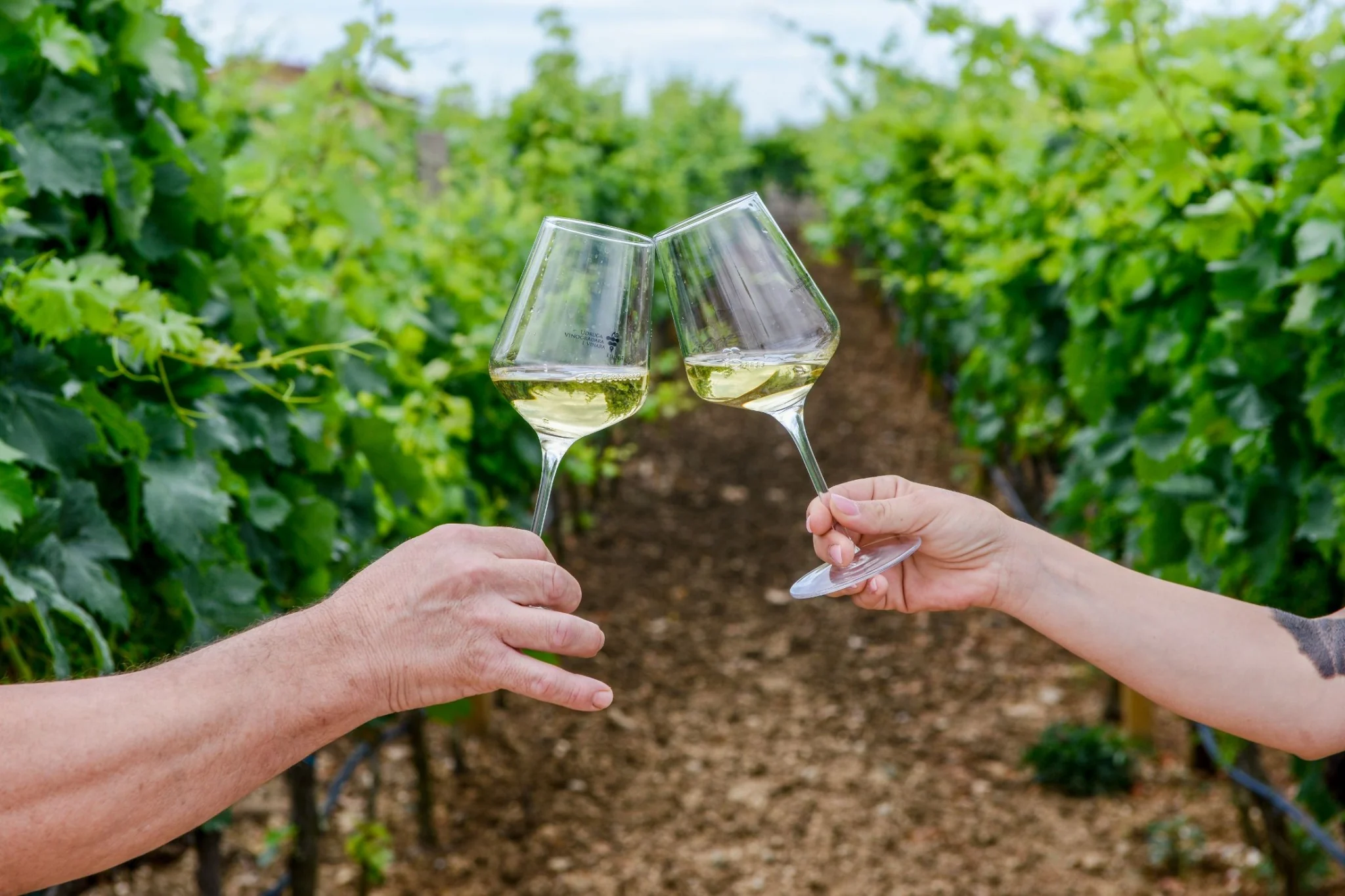
The vineyards of Herzegovina
Herzegovina is one of Europe's lesser-known wine regions, but winemaking has deep roots here. The sun, the mineral-rich soil, the dry summers and the stony fields create particular conditions for growing vines.
In many places the vines stand in a landscape that can look harsh at first. The soil is red, the stones pale, the sun strong. The grapes thrive nonetheless, because the roots reach deep for water and nutrients.
The white Žilavka is Herzegovina's best-known grape, giving fresh, mineral wines. The blue Blatina is a local speciality: its flowers are functionally female, so other varieties are planted between the rows to ensure pollination. Trnjak and Vranac give darker, more powerful reds.
Herzegovina's official wine route brings together around 30 wineries, linking Mostar, Čitluk, Ljubuški, Čapljina, Stolac and Trebinje.
Carski Vinogradi: the imperial vineyards
A particular chapter in Herzegovina's wine history is Carski Vinogradi near Mostar. The name means the imperial vineyards.
The story goes back to the Austro-Hungarian period and the time of Emperor Franz Joseph. Today the estate combines that history with modern winemaking, local grapes and a large property of vineyards, olive groves and views across the landscape.
A visit is therefore about more than a tasting. In the cellar, oak barrels, amphorae and modern methods sit side by side, while the fields outside speak of the sun, the soil and the grapes that shaped the area.
Would you like to taste Herzegovina?
We can put together a food and wine trip with winery visits, local meals, vineyards and plenty of time to enjoy the surroundings. It can be combined with Mostar, Trebinje, Počitelj, the Kravica waterfalls and experiences along the Neretva.
Get a proposal for a wine tripWorld Heritage in Bosnia and Herzegovina
The culture and nature of Bosnia and Herzegovina are recognised by UNESCO. The World Heritage here ranges from bridges and medieval burial grounds to caves and ancient beech forests.
Stari Most and the old town of Mostar speak of Ottoman architecture, the city's destruction during the war and its later reconstruction. The Mehmed Paša Sokolović bridge in Višegrad is another masterwork of the Ottoman period.
The medieval stećci burial grounds reflect a distinctive regional tradition, while the Vjetrenica cave in Herzegovina holds a remarkable underground ecosystem. The ancient beech forests form part of a shared European World Heritage site protecting some of the continent's most valuable woodland.
The UNESCO sites make natural highlights on a culture trip or a round trip through Bosnia and Herzegovina.
When should you travel to Bosnia and Herzegovina?
Spring
Spring is ideal for round trips, culture, hiking at lower altitudes and active days out. The landscape turns green, the rivers run well, and temperatures are pleasant in both the cities and Herzegovina.
Summer
Summer suits mountain hiking, rafting, lakes, city life and longer round trips. In Herzegovina the days can be very hot, while the mountains offer cooler air and more comfortable temperatures.
Autumn
Autumn is a special time for food and wine. The grapes are harvested, the landscape changes colour, and the temperature is often right for both city walks and time outdoors. It is an obvious moment for a combination of culture, wine and local meals.
Winter
In winter the mountains around Sarajevo become the centre for skiing and snow. At the same time the cities take on a quieter mood, where cafés, restaurants, museums and historic sights can be enjoyed without the summer heat.
Good to know about Bosnia and Herzegovina
Bosnia and Herzegovina is closer to Denmark than many people imagine. When direct flights between Copenhagen and Sarajevo are offered, the flight takes around two hours. The trip can also be arranged with connections via other airports, depending on the date, the route and what the journey includes.
The capital is Sarajevo and the currency is the convertible mark, abbreviated BAM or KM. It is pegged to the euro. Cards are accepted in many places in the cities, but cash remains practical in smaller shops, at markets and in rural areas.
Bosnian, Croatian and Serbian are spoken. The languages are closely related, and many people — especially younger people and those working in tourism — also speak English.
Bosnia and Herzegovina is in the same time zone as Denmark. The country is not an EU member, so check mobile data and roaming charges with your provider before you travel.
Danish travellers should always check the current rules on passports, entry and travel advice with the Ministry of Foreign Affairs before departure.
Country facts
Country: Bosnia and Herzegovina Capital: Sarajevo Currency: Convertible mark, BAM or KM Languages: Bosnian, Croatian and Serbian Time zone: The same as Denmark Flight time: Around two hours on a direct flight between Copenhagen and Sarajevo, when the route is offered Best time to travel: Depends on the kind of trip. Spring and autumn are ideal for round trips. Summer suits the mountains, rafting and active days. Winter is the obvious choice for skiing and a city break.
Explore the regions
Frequently asked questions about Bosnia and Herzegovina
How would you like to experience Bosnia and Herzegovina?
Perhaps you dream of waking with a view of the mountains, walking through a landscape without crowds and having lunch beside a clear river. Perhaps you want to dig into Sarajevo's history, feel the evening sun over Mostar's old stone bridge, or taste Žilavka among the vineyards of Herzegovina. You do not need to know in advance which mountains, towns and lakes should be part of the trip. Knowing the distances, the options and the local places that suit you is our job. Tell us when you want to travel, how long you want to be away and what you would like to bring home from the journey. We will put together a free, no-obligation travel proposal.